
📅 August 14, 2026 ⏱️11:00AM
What is a Telecom Tower and How Does It Work?
Introduction
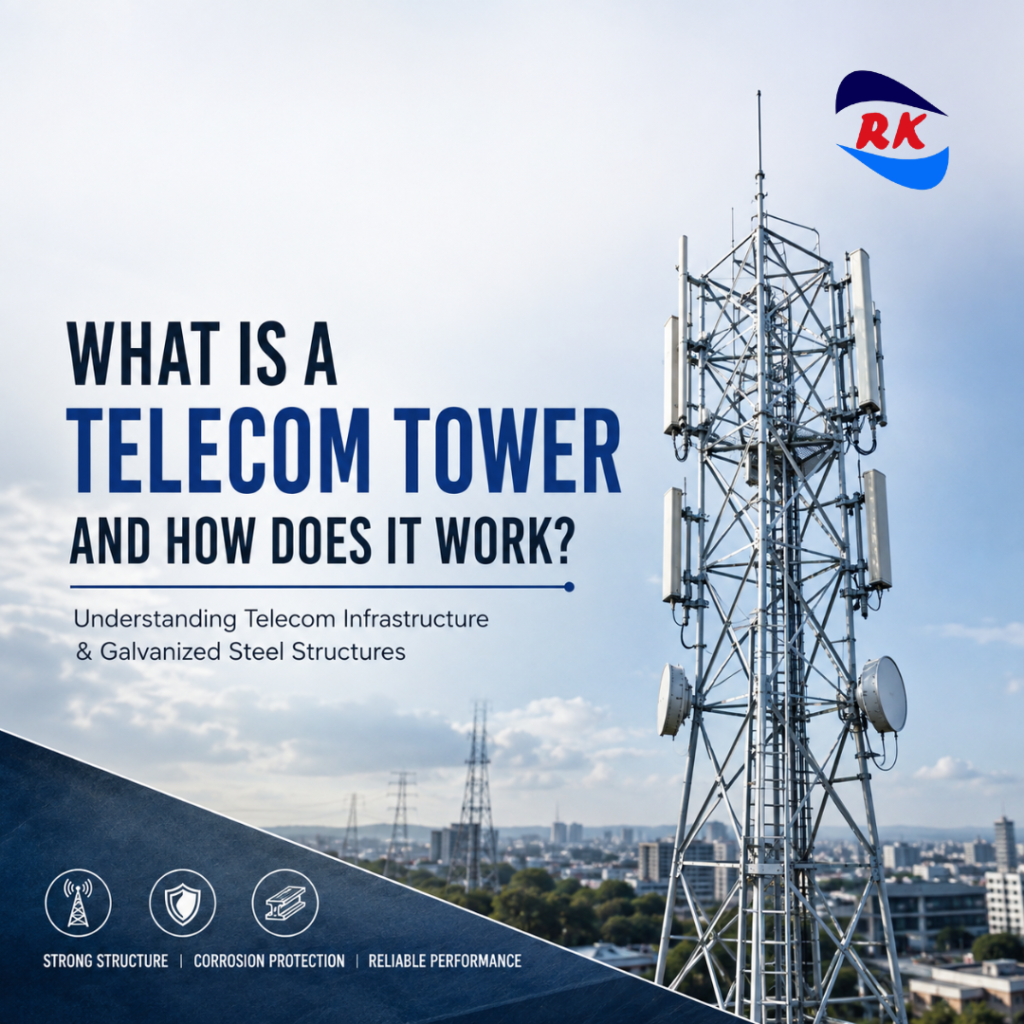
Telecom towers are an important part of modern communication infrastructure. They provide the required height and support for antennas that transmit and receive mobile and wireless signals. A telecom tower is generally made from strong steel components and is designed to support antennas, cables, and communication equipment.
Because telecom towers are installed outdoors, they need to be strong, durable, and protected against corrosion. Hot Dip Galvanizing is commonly used to provide additional protection to steel structures and improve their service life.
Problem Statement
Telecom towers need to remain stable while supporting antennas and other communication equipment. They are also exposed to rain, moisture, wind, sunlight, and other outdoor conditions.
If steel components are not properly protected, corrosion can develop over time and affect the durability of the structure. Poor fabrication or unsuitable materials can also reduce structural reliability.
For this reason, businesses need a reliable Hot Dip Galvanized Steel Structure Manufacturer that understands structural fabrication, material quality, and corrosion protection.
How Does a Telecom Tower Work?
A telecom tower provides a strong and elevated structure for mounting antennas and communication equipment.
The antennas transmit signals to mobile phones and other wireless devices. They also receive signals from these devices and transfer them through the communication network.
The basic process is:
Mobile Device → Antenna → Telecom Tower → Communication Network
The tower mainly acts as a support structure. Its height helps antennas cover a larger area and maintain better communication between devices and the network.
Depending on the application, towers can have different heights, structural designs, and configurations. The steel components must be accurately fabricated and properly protected for reliable outdoor performance.
How We Solve the Requirement
At RK Engineering, we focus on manufacturing strong and reliable engineering products for industrial and infrastructure applications. As a top manufacturer, RK Engineering combines Industrial Fabrication, quality materials, and suitable surface protection to meet different project requirements.
For telecom and other outdoor structures, galvanizing can help protect steel against corrosion. Our capabilities in Structural Steel Galvanizing and Industrial Galvanizing Services support the production of durable galvanized components.
The same manufacturing expertise can also be applied to products such as GI Cable Tray, HDG Cable Tray, Galvanized Cable Tray, Earthing Strip, GI Earthing Strip, and other electrical infrastructure products.
Our approach focuses on:
- Quality steel materials
- Accurate industrial fabrication
- Strong structural construction
- Proper welding and assembly
- Suitable hot dip galvanizing
- Corrosion-resistant protection
- Quality inspection during manufacturing
This helps provide reliable products for demanding industrial and infrastructure applications.
Case Study
Consider a telecom project where antennas and communication equipment need to be installed at a considerable height. The supporting tower must handle the weight of the equipment as well as outdoor environmental conditions.
For such applications, RK Engineering focuses on accurate Industrial Steel Fabrication and appropriate corrosion protection. A properly manufactured Galvanized Steel Structure can provide strong and durable support for outdoor communication infrastructure.
The same quality-focused approach is useful for other infrastructure requirements, including Industrial Cable Tray, Cable Support System, Outdoor Cable Tray, Earthing Materials, and Solar Mounting Structure applications.
By focusing on material quality, fabrication accuracy, and corrosion protection, RK Engineering helps customers obtain reliable engineering products for long-term projects.
Conclusion
Telecom towers play an important role in modern communication networks. They provide the height and structural support needed for antennas and communication equipment.
Strong fabrication, quality steel, and proper corrosion protection are important for achieving long-term performance in outdoor applications. Choosing an experienced manufacturer can help businesses get reliable and durable engineering solutions.
RK Engineering is a top manufacturer offering Industrial Fabrication, Hot Dip Galvanizing, Galvanized Products, cable management products, earthing materials, and galvanized steel structures for different industrial and infrastructure requirements.
For more information about RK Engineering and its manufacturing solutions, visit: https://rkenggindia.com/
💎 FAQ
Frequently Asked Questions
1. What are the benefits of using Hot Dip Galvanized Cable Trays for industrial projects?
Hot Dip Galvanized Cable Trays provide excellent corrosion resistance, long service life, high load-bearing capacity, and durability in harsh industrial environments. They are ideal for outdoor installations, power plants, oil & gas facilities, and infrastructure projects.
2. Why is RK Engineering considered a reliable Cable Tray Manufacturer for African projects?
RK Engineering offers export-quality GI Cable Trays, HDG Cable Trays, Ladder Cable Trays, Raceway Cable Trays, and Earthing Solutions designed specifically for demanding industrial applications. The company focuses on precision manufacturing, heavy-duty performance, and long-lasting galvanizing protection.
3. What types of cable tray systems does RK Engineering manufacture?
RK Engineering manufactures a wide range of products including Perforated Cable Tray, Ladder Cable Tray, Raceway Cable Tray, Heavy Duty Cable Tray, Cable Tray Accessories, GI Cable Tray, and Industrial Cable Management Systems for industrial and infrastructure projects.
4. How do GI Earthing Strips and Earthing Electrodes improve industrial safety?
GI Earthing Strips and Earthing Electrodes help provide reliable electrical grounding, reduce electrical faults, improve equipment safety, and protect industrial systems from power surges and short circuits.
5. Does RK Engineering provide customized cable tray and galvanizing solutions?
Yes, RK Engineering offers customized Hot Dip Galvanized OEM products, Industrial Galvanizing Services, and tailored cable tray systems based on project specifications, industrial load requirements, and environmental conditions.